

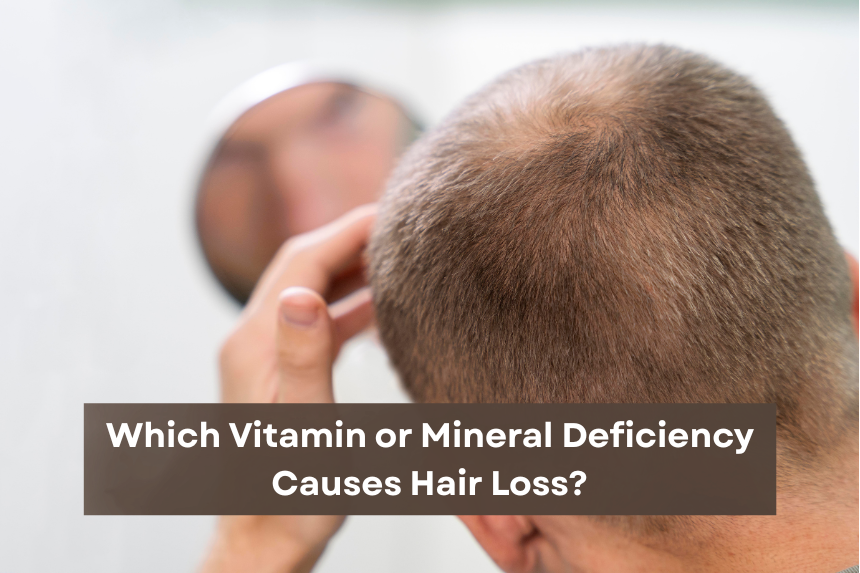
Seeing extra hair on your pillow or in the shower once in a while is usually nothing to worry about. Hair naturally goes through a cycle of growing, resting, and shedding. The concern starts when the shedding becomes noticeably heavier, your hair begins to look thinner, or you start seeing more scalp than usual.
At that point, it is natural to wonder whether your diet or a vitamin deficiency could be behind it.
Nutrients do matter for healthy hair growth. Low iron, vitamin D, vitamin B12, and zinc levels have all been linked with certain types of hair loss. But deficiency is only one possibility. Hormonal changes, thyroid problems, stress, genetics, illness, and even rapid weight loss can also affect the hair-growth cycle.
So before reaching for a supplement, it helps to understand what might actually be going on.
Which Vitamin Deficiency Causes Hair Loss? Common Nutritional Deficiencies to Know
Hair follicles are active parts of the body and need a regular supply of nutrients to function normally. When the body is running low on certain nutrients, hair growth can sometimes be affected.
Iron is one of the nutrients doctors commonly check when trying to understand unexplained hair shedding. Low iron stores, particularly low ferritin, may be associated with increased shedding in some people.
Vitamin D also has a role in normal hair follicle function. Low vitamin D levels have been observed in people with certain hair-loss conditions, although a low vitamin D result does not necessarily prove that the deficiency caused the hair loss.
Vitamin B12 is another nutrient worth considering, especially when someone has a restricted diet or other symptoms associated with B12 deficiency.
Zinc supports cell growth and tissue repair, so inadequate levels may also affect hair and skin health.
Protein intake matters too. Very restrictive diets or significant weight loss can leave the body short of the nutrients it needs for normal hair growth.
If your hair has been shedding more than usual, a nutritional deficiency test may be useful in some cases. The right tests, however, depend on your symptoms and medical history.
Can Iron Deficiency Cause Hair Loss? Signs You Shouldn’t Ignore
Yes, iron deficiency hair loss is a possibility, particularly when iron stores are low. It is more commonly considered in people who have other risk factors for iron deficiency, including heavy menstrual bleeding, inadequate dietary iron intake, or certain digestive conditions.
Hair shedding may not be the first symptom you notice. Some people also experience tiredness, weakness, dizziness, headaches, pale skin, or reduced exercise tolerance.
But these symptoms aren’t specific to iron deficiency. Being tired, for example, can have dozens of explanations.
If your doctor suspects low iron, they may recommend a complete blood count along with iron-related tests such as ferritin. Looking at the results together is more useful than focusing on one number in isolation.
It’s also worth avoiding self-prescribed iron supplements. Too much iron can be harmful, and taking it when you don’t actually have a deficiency won’t necessarily improve hair growth.
What Are the Common Causes of Hair Fall in Women and Men?
The reason behind hair fall can vary considerably from one person to another.
For women, increased shedding may occur after pregnancy or childbirth, during periods of hormonal change, with thyroid problems, because of nutritional deficiencies, or following significant physical or emotional stress. Some women also experience hair thinning associated with conditions such as polycystic ovary syndrome.
The hair fall causes women experience can therefore be quite different from what causes gradual thinning in men.
In men, hereditary or male-pattern hair loss is particularly common. It is influenced by genetics and hormones and often develops gradually around the hairline or crown. However, nutritional deficiencies, illness, stress, medications, and other health issues can also contribute.
Other possible triggers for both men and women include:
- Rapid weight loss
- Crash or highly restrictive diets
- Major illness or surgery
- Prolonged stress
- Thyroid disorders
- Certain medications
- Scalp infections or inflammatory conditions
- Family history of hair loss
This is why simply searching for the best vitamin for hair growth may not get to the real issue.
What Blood Test Can Find the Cause of Hair Loss?
There isn’t one universal blood test for hair loss. The tests a doctor recommends will depend on your symptoms, age, medical history, diet, and the pattern of hair loss.
Depending on the situation, essential blood testing may include:
- Complete blood count (CBC): Can help identify anemia and other blood-related abnormalities.
- Ferritin and iron studies: May be advised when iron deficiency is suspected.
- Vitamin B12: Useful when B12 deficiency is a possibility.
- Vitamin D: May be checked when there are reasons to suspect low vitamin D levels.
- Thyroid function tests: Thyroid disorders can cause changes in hair growth and shedding.
- Zinc: May be considered in selected cases, particularly where dietary deficiency is suspected.
A blood test for hair loss is therefore not necessarily a single checkup or test. A doctor may choose one test or several based on what seems most relevant.
And blood work isn’t always enough. If the hair loss has a particular pattern, a dermatologist may be able to learn more by examining the scalp and hair follicles. In some cases, further testing may be needed.
Can Hair Loss Be Caused by a Health Condition Other Than Vitamin Deficiency?
Definitely. A nutritional deficiency is only one piece of the puzzle.
Thyroid disorders, hormonal changes, autoimmune conditions, hereditary hair loss, scalp conditions, medications, and prolonged stress can all play a role. Hair shedding can also increase temporarily after a high fever, major infection, surgery, childbirth, or another significant physical stress.
The timing can sometimes be helpful. For instance, someone may notice substantial shedding several weeks or months after recovering from an illness. That doesn’t necessarily mean the illness is still present; the hair-growth cycle can take time to return to its usual pattern.
The appearance of the hair loss matters too. Gradual thinning is different from sudden bald patches, and widespread shedding is different from hair breaking close to the scalp.
If the change is sudden, continues for several months, creates visible bald patches, or comes with scalp irritation or other symptoms, it’s worth getting medical advice rather than assuming you need a supplement.
Where Can You Get a Blood Test for Hair Loss in Mumbai?
If your doctor recommends laboratory testing, having the tests performed through a reliable provider can make the process easier.
A diagnostic center in Mumbai can provide routine and specialized blood tests depending on what your doctor has advised. These may include tests related to iron, vitamins, thyroid function, blood counts, and other health markers.
A trusted pathology lab in Mumbai plays an important role in processing these samples and providing laboratory reports. However, the choice of tests should ideally come from a healthcare professional who has considered your symptoms rather than from a standard hair-loss test package chosen without medical guidance.
At Apple Diagnostics, patients can access a range of diagnostic services, including blood tests and preventive health testing. If you’ve been advised to have a blood test in Mumbai, the required tests can also be done through home blood sample collection as part of your diagnostic evaluation.
Get the Right Tests to Understand Hair Loss at Apple Diagnostics
Hair loss can have a simple explanation, but sometimes it is the first noticeable sign that something else needs attention. A low nutrient level may be involved, but it isn’t the only possibility.
Rather than taking several supplements and hoping for the best, it is more useful to first understand what may be causing the change. A clinical evaluation, followed by targeted testing when appropriate, can help narrow things down.
If you’re planning a health checkup in Mumbai or have been advised to get tested for persistent hair fall, Apple Diagnostics offers laboratory and diagnostic services to support your testing needs.
Most importantly, don’t panic over a few extra strands. But if your hair loss is clearly different from your usual pattern, don’t ignore it either. Finding the reason is a much better starting point than guessing.