

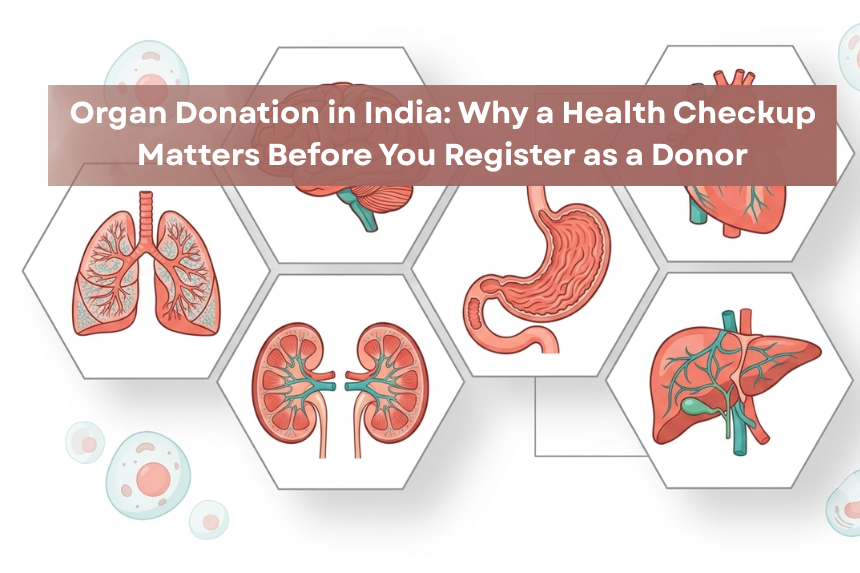
Organ donation is one of the most meaningful ways a person can help another life. A single donor can potentially help several people waiting for a transplant, making organ donation a decision that can have an impact far beyond one individual.
Yet, many people have questions before they register. Can anyone become an organ donor? Do I need to be completely healthy? What medical tests are required? Can an existing health condition prevent me from donating?
These are important questions. Understanding your health and knowing how the donation process works can help you make an informed decision. With World Organ Donation Day observed on August 13, it is also a good opportunity to learn more about organ donation, donor health, and the importance of awareness.
What Is Organ Donation and Who Can Become an Organ Donor?
Organ donation is the process of giving an organ or tissue to help someone who needs a transplant. Depending on the circumstances, donation may take place after death, while certain organs or tissues may also be donated by a living person under specific medical and legal conditions.
Becoming an organ donor does not necessarily mean that you must be perfectly healthy or free from every medical condition. Donor suitability is determined through a detailed medical evaluation at the appropriate time.
Factors such as age, medical history, current health, the condition of individual organs, and the circumstances surrounding donation can all influence whether organs or tissues are suitable for transplantation.
If you are considering organ donation registration, it is important to understand the process rather than assuming that a particular health condition automatically makes donation impossible.
Why Is a Donor Health Checkup Important Before Organ Donation?
A donor health checkup can provide a clearer picture of your current health. While a routine health checkup does not determine whether someone will ultimately be an eligible donor, it can help identify health concerns that may otherwise go unnoticed.
Conditions such as high blood pressure, diabetes, high cholesterol, liver problems, kidney concerns, or certain infections can sometimes develop without obvious symptoms.
A health checkup for an organ donor can therefore be viewed as part of being health-conscious rather than as a test that guarantees donor eligibility.
Regular health checkups are important to help you:
- Understand important health parameters.
- Identify certain health concerns at an earlier stage.
- Keep track of existing medical conditions.
- Discuss relevant health issues with your doctor.
- Maintain updated medical records.
It is important to remember that the formal assessment of a donor is performed by the appropriate transplant or medical team. They decide which evaluations are necessary and whether an organ or tissue is medically suitable for transplantation.
What Medical Tests Are Done for Organ Donation?
There is no single set of medical tests for organ donation that applies to every donor. The investigations depend on whether the donation involves a living or deceased donor, the organ or tissue being considered, and the person’s medical circumstances.
Depending on the situation, the medical team may evaluate:
- Blood tests: To check blood group, blood counts, blood sugar, and other important health markers.
- Kidney function tests: To assess how well the kidneys are functioning.
- Liver function tests: To evaluate liver health and identify possible abnormalities.
- Infection screening: To check for certain infections that may affect transplant suitability.
- Imaging tests: Ultrasound, CT, MRI, or other imaging may be recommended to assess specific organs.
- Heart tests: An ECG, echocardiogram, or other cardiac evaluation may be advised when required.
- Organ-specific investigations: Additional tests may be performed depending on which organ or tissue is being considered.
- Medical history review: Doctors may review existing conditions, medications, previous surgeries, allergies, and other relevant health information.
- Physical examination: A clinical examination may form part of the overall assessment.
Blood tests are an important part of routine health monitoring and can provide valuable insights into your overall health.
The final decision about whether an organ or tissue is suitable for transplantation is made by the appropriate medical and transplant team after considering all relevant findings.
Can Your Health Condition Affect Your Eligibility for Organ Donation?
Having a health condition does not automatically mean that you cannot become an organ donor.
For example, some people may have a chronic condition that is well controlled and still choose to register their intention to donate. However, whether a particular organ or tissue can ultimately be used is assessed medically at the appropriate time.
Certain infections, cancers, severe organ disease, or other medical circumstances may affect the suitability of particular organs. However, these decisions are highly individual and depend on factors such as the condition, treatment history, organ health, and circumstances surrounding donation.
This is why it is better to avoid relying on assumptions or information found online when deciding whether you can donate.
If you are considering becoming an organ donor, speak with your healthcare provider about significant medical conditions, medications, previous procedures, or any concerns you may have.
How Does World Organ Donation Day Promote Organ Donation Awareness?
World Organ Donation Day provides an opportunity to start conversations about donation and encourage people to understand how the process works.
Organ donation awareness is important because many people support donation in principle but may never formally communicate their wishes to their family or learn about the applicable registration process.
World Organ Donation Day can help people:
- Learn how organ donation works.
- Understand common misconceptions about donation.
- Learn about donor eligibility and medical evaluation.
- Discuss their wishes with family members.
- Explore the official process for registering as a donor.
- Encourage others to have informed conversations about donation.
If you are thinking about becoming an organ donor, take time to understand the official process in India and communicate your decision clearly to your family.
Knowing your wishes can help your loved ones understand and support your decision when the time comes.
Where Can You Get a Health Checkup Before Organ Donation in Mumbai?
If you’re planning a routine health checkup in Mumbai, choosing a reliable diagnostic centre can help you keep track of important health indicators.
A diagnostic center in Mumbai can provide routine blood investigations and other diagnostic services that help you understand your current health. These tests can be useful for general health monitoring, although they should not be confused with the specialized evaluation performed for transplant donation.
At Apple Diagnostics, patients can access a range of medical diagnostic services, including routine blood investigations, preventive screenings, and health checkups. Regular testing can help identify changes in health and encourage timely medical follow-up when required.
For people who want to stay proactive about their health, a routine health checkup can be a useful way to understand important health parameters and maintain an updated health record.
Support Organ Donation Awareness With Apple Diagnostics
Choosing to become an organ donor is a deeply personal decision. Being informed about your health and understanding the donation process can help you make that decision with greater awareness.
This World Organ Donation Day, take some time to learn about organ donation, understand the official registration process, discuss your wishes with your family, and avoid common misconceptions about donor eligibility.
Regular health monitoring is valuable regardless of whether you decide to register as a donor. If you are due for a routine blood test in Mumbai or a preventive health assessment, Apple Diagnostics provides a range of diagnostic services to help you stay informed about your health.
Remember, a routine health checkup does not determine whether you will ultimately be an eligible organ donor. Final donor suitability is assessed by the appropriate medical and transplant team based on the circumstances at the time of donation.
Organ donation begins with awareness. Understanding the process, sharing your decision, and encouraging informed conversations can help build a more donation-aware society.